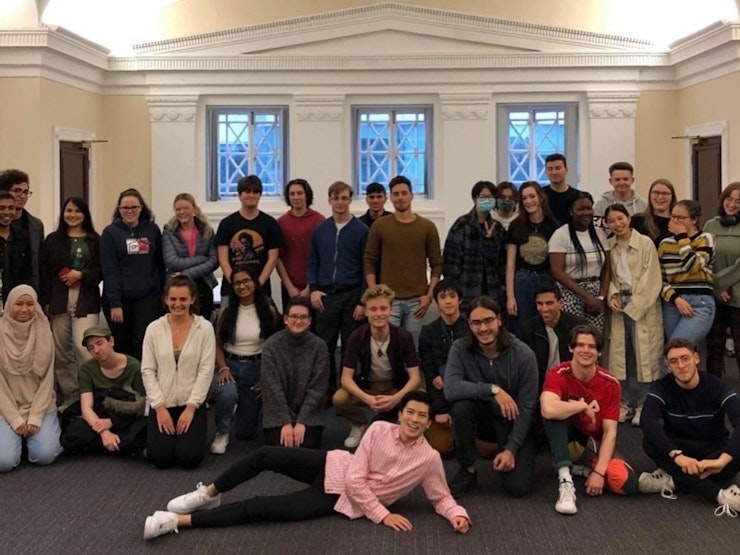
Alcohol can affect our student lives, whether we drink or not. But understanding its impact can help us make more informed choices and get the most from student life.
Whether studying at university or college, doing an apprenticeship, taking part in a training programme or combining learning with work, alcohol may well show up in some form during our life as a student.
However, drinking too much alcohol and too often can cause all sorts of problems for our mental and physical health, as well as our studies.
Understanding why we drink, how alcohol can affect our wellbeing and studies, and how to make informed choices can help us navigate student life more confidently, and enjoy the experience while looking after ourselves and those around us.
Alcohol and student culture today
Those of us who drink alcohol can sometimes find ourselves doing so for a variety of reasons, including to socialise, to boost confidence, to fit in, to have fun, to try and cope with and avoid problems because we feel lonely, or simply because others around us are drinking.
While alcohol is often seen as central to student culture, the reality is far more diverse. Recent figures for England show that 16-24-year-olds are less likely to drink than older age groups. [1] However, among those who do drink, some still consume relatively large amounts on their heaviest drinking day.
Ultimately, there’s no single ’normal’ way to approach alcohol as a student. Our choices may look different from those around us, and that’s okay.
Nonetheless, we might find ourselves worrying about the role alcohol plays in our student life and how it might be perceived or influenced by others. We might experience pressure - direct or subtle - to join in with group drinking, especially in new social situations or tightknit settings like shared accommodation, societies or workplace-based training. And because students often over-estimate how much our peers drink, [2, 3] it can be easy to feel like alcohol is more expected than it really is.
Additionally, we might benefit from reflecting on whether we’re ‘sober shaming’, where we make someone feel uncomfortable for not drinking. When we sober shame, we make others’ decisions not to drink alcohol harder through making them seem wrong or boring - and therefore contribute to a culture where drinking feels like the default, rather than a choice.
The impact of alcohol on student life
What we often don’t think about is the way alcohol actually makes us feel. Of course, in the moment alcohol can help us feel more confident, connected and like we fit in. It can lower our inhibitions, help us relax and seem like a way to cope. While these effects may feel positive at first, they’re very short-lived and quickly pass the more we drink, putting our health and wellbeing and safety at risk.
That’s because, as well as producing extra dopamine which makes us feel good, alcohol is a depressant and slows down the parts of the brain where we make decisions and consider consequences. This can affect our mood, judgement, coordination and overall wellbeing, sometimes more than we’d expect. In the short term, drinking too much or too quickly can lead to confusion, vomiting, irregular breathing and even alcohol poisoning, which is a medical emergency. It can also disrupt our sleep, lower our mood and energy levels, and make it harder to concentrate and keep on top of our studies, work, relationships, and daily life.
What’s more, young adults may feel alcohol’s effects more strongly because our brains are still developing.
Student life and ‘binge drinking’
Heavy episodic drinking (often referred to as 'binge drinking') is common among UK university students, with research indicating that students are more likely to drink heavily than our non-student peers, even though overall drinking among young people has fallen in recent years. [4]
Binge drinking comes with extra risks, unique to drinking large quantities of alcohol in one sitting. This includes alcohol poisoning, leading to symptoms such as confusion, difficulty with coordination, vomiting, unconsciousness and seizures.
Drinking too much alcohol in one session can also impact how we behave and impair our decision-making, increasing the likelihood of taking risks or doing things we might later regret. It can also strain friendships and relationships, and raise the risk of accidents, injuries and hangovers.
Trying to avoid binge-drinking or reducing the number of times we do this helps to lower the risks of harm. Simple swaps like opting for a smaller serve (e.g. swapping large glasses to small glasses, pints to halves, doubles to singles), or switching to a lower alcohol by volume percentage (ABV%) drink can be helpful in achieving this.
Alcohol, stress and mental health
Drinking can sometimes feel like a way to unwind from stress, deadlines or pressure - but alcohol often makes anxiety and ‘hangxiety’ (the feeling of being anxious the day after drinking), and low mood worse, even if it seems to help in the moment. When juggling study, work, finances or big life changes, it’s natural for our drinking patterns to shift, but alcohol can disrupt sleep and concentration, making day‑to‑day challenges feel harder.
There are other ways to manage stress that can support wellbeing without the downsides, such as building small routines, keeping active, taking mindful breaks, and reaching out to those we trust. Learning more about the ways in which alcohol and mental health are linked can be helpful. There’s also support available for anyone who needs it.
Support for students who don’t drink or want to drink less
Lots of students choose not to drink, or to drink less than we used to. In 2024, 35% of 16-24 year olds reported not drinking alcohol in the previous 12 months, compared to 19% in 2011, which is a significant shift. [1]
For those who don’t drink, or are cutting back, there are still plenty of ways to be part of student life. Many universities and colleges offer alcohol-free events and social activities that aren’t centred around alcohol, especially during welcome periods and throughout the year, making socialising a little easier without feeling out of place or as though we’re missing out. It can also be helpful to have a simple line ready if someone asks us why we’re not drinking, but remember we don’t owe anyone an explanation.
Whether taking a break from alcohol, avoiding it completely, or just drinking less than before, each of our choices are valid, and we deserve social spaces where we can feel comfortable and included.
Tips for managing your drinking
To reduce the risk of alcohol-related harm, it's best not to regularly drink more than 14 units a week, and to spread this drinking over three or more days, with regular alcohol-free days. [5]
There are a few simple ways you can keep yourself safe, reduce the risks and stay in control, such as:
Planning the journey home before going out
Eating before drinking to help slow alcohol absorption
Pacing yourself and avoiding drinking too much too quickly
Alternating between alcoholic and non-alcoholic drinks to stay hydrated
Swapping large glasses for small glasses, pints for halves, doubles for singles, or switching to a lower ABV% drink
Sticking with people you trust and making sure you look out for one another
Keeping an eye on your drink and never leaving it unattended
Being aware of drink spiking risks and seeking help if something doesn't feel right.
Aiming to drink no more than six units on a single occasion to reduce the risk of injury and accidents
Avoiding regularly drinking more than 14 units a week, and spreading your drinking over three or more days, and including regular alcohol-free days.
It can also be helpful to pay attention to how alcohol is affecting your sleep, energy levels, mood and studies. Using a free app, like Try Dry®, can be a helpful way to keep track.
Small steps like these can help you stay safe, feel better and enjoy night’s out and student life more fully.
Alcohol Change UK’s handy unit calculator offers a simple way to calculate the number of alcohol units in our drinks, both for a single occasion and across a week.
[2] Tarrant, M., Sherwood, K., Terry, J. R., & Moniz, S. (2019). Alcohol consumption among university students in the night-time economy in the UK: A three-wave longitudinal study. Drug and Alcohol Dependence, 204, 107530. https://doi.org/10.1016/j.drugalcdep.2019.107530
[3] Jones, S. C., & Gregory, P. (2017). Responsible drinking ‘social norms’ messages not credible, say students. Drugs: Education, Prevention and Policy, 24(5), 426–434.
[4] Bhatti, S.N., Fan, L.M., Collins, A. and Li, J.M., 2020. Exploration of alcohol consumption behaviours and health-related influencing factors of young adults in the UK. International journal of environmental research and public health, 17(17), p.6282.